

Availability only means something when it is measured against the hours a machine was meant to be running. Shift Management defines that calendar, shifts with their days, hours and breaks, and holidays that come out of it, and the availability figures are then divided by the right number.
The Denominator Is the Hard Part
A machine that is off because nobody is working is not an unavailable machine. Divide running time by the whole calendar and every plant that does not run three shifts looks bad, which is why availability numbers get quietly ignored.
Shift Management fixes the denominator. A shift carries the days it applies to, the hours it covers and the breaks inside it, along with a colour so it can be picked out on a chart. A definition can be copied across every day at once, several time ranges can sit inside one shift, and an overlap is caught when you save rather than found later in a report.
Holidays, Including the Ones You Did Not Type In
Holidays sit beside the shifts and come out of the available hours. A holiday can be a one-off or recur every year. National holidays can be imported for a country and a year, then selected from the list, which is faster and less error-prone than entering a public calendar by hand.
Capacity You Can See
From the shifts themselves the platform works out weekly hours, a monthly average and an annual total, and it shows the holiday and break deductions separately rather than folding them in. The capacity a planner reasons from is visible, which matters when the plan and the reality start to disagree.
The current shift, the time remaining in it and the next one up are shown as well, along with the plain fact that today is a holiday when it is.
Availability, Then
The running time itself is not entered by anyone. Every measurement a Sensemore sensor takes carries the shaft speed with it, and the platform reads that speed: above zero the machine is running, and the time accumulates until it stops again. Nothing is tapped off a PLC, no run-hours counter is fitted, and a machine that was installed for vibration monitoring turns out to have been reporting its own uptime all along.
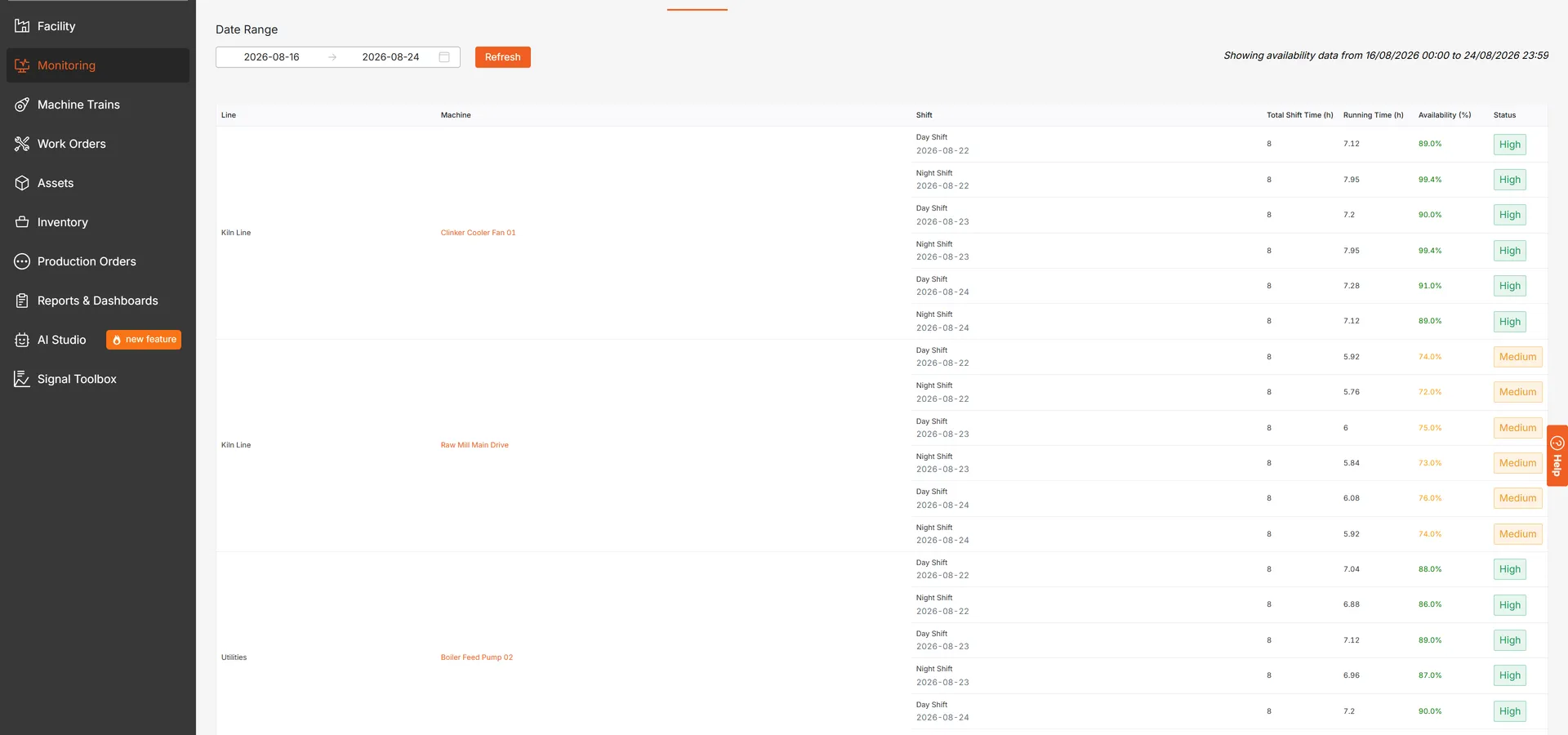
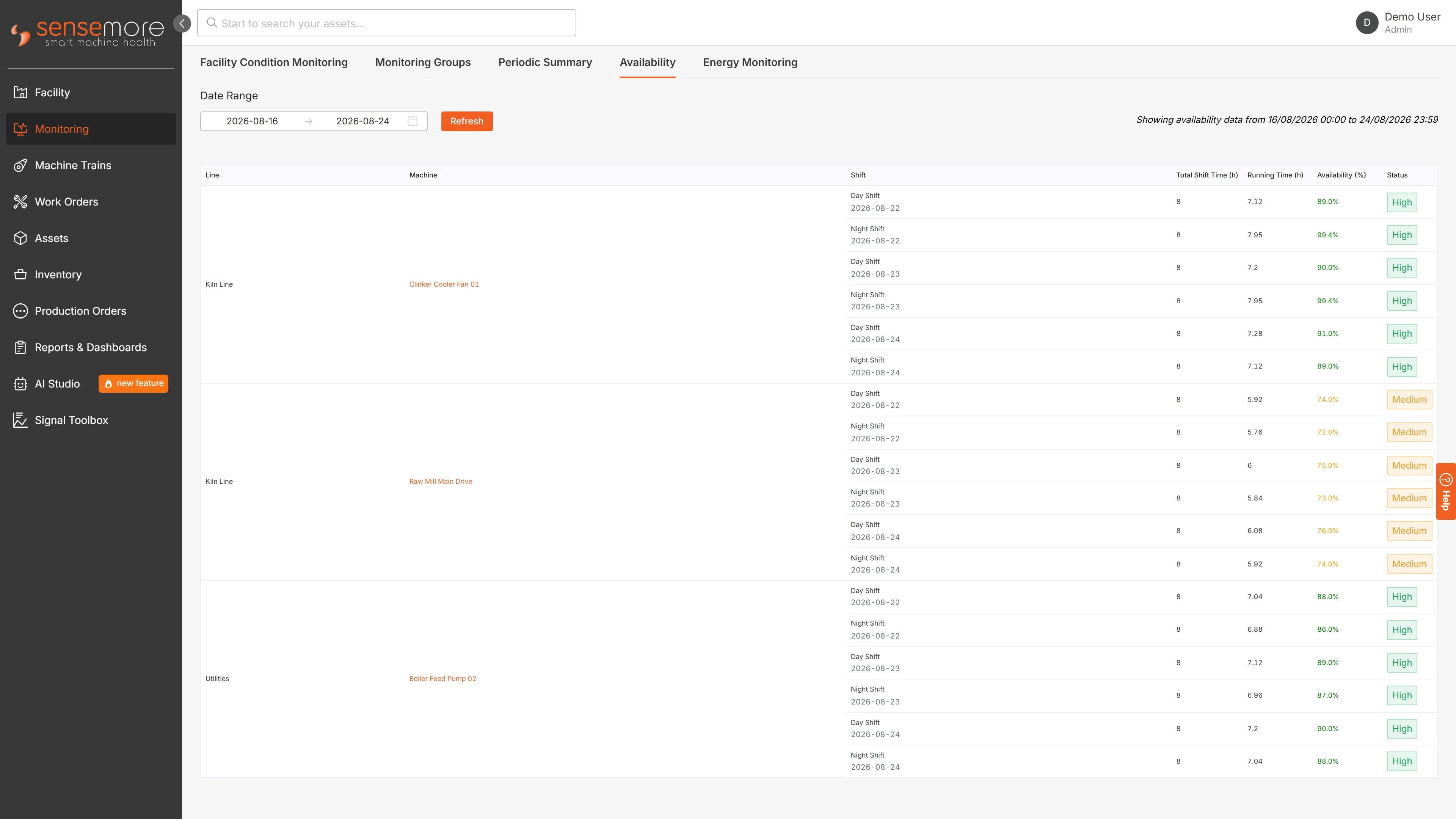
With the calendar in place, availability is running time over total shift time for whatever period you choose, per machine and averaged across the facility. The machines running low are listed rather than left to be found, so the first question in a morning meeting has an answer before the meeting starts.
Where to Find It
Shift Management is in the facility settings, and availability appears on the facility overview, in monitoring, and as a block in generated reports.
Frequently asked questions
Why does availability need a shift calendar?
Because availability is a ratio, and the denominator has to be right. A machine standing still on a Sunday when nobody is working is not unavailable, but a figure that divides running time by the whole calendar counts it as though it were. Shift Management sets what the plant was actually meant to be running, and availability is measured against that.
What can a shift describe?
A shift carries the days it applies to, the hours it covers, the breaks inside it and a colour so it can be picked out on a chart. Several time ranges can sit in one shift, a definition can be copied to every day at once, and overlapping shifts are caught when you save rather than discovered later in a report.
How are holidays handled?
Holidays are defined alongside shifts and excluded from the available hours. They can be one-off or recurring every year, and national holidays can be imported for a chosen country and year, then picked from the list rather than typed in one at a time.
What does the availability view show?
Running time, total shift time and availability as a percentage, for a period you choose. At facility level there is an average across machines and a list of the ones running low, so the question of which machines to look at first is answered before anyone opens a chart.
Where does the running time come from?
From the machines themselves. Every measurement a Sensemore sensor takes carries the shaft speed with it, and the platform counts a machine as running whenever that speed is above zero, accumulating the time until it stops again. Nothing has to be wired into a PLC, no run-hours counter has to be fitted and nobody has to enter anything by hand.
Where do the available hours totals come from?
From the shift definitions themselves. Weekly hours, a monthly average and an annual total are worked out from the shifts, with the holiday and break deductions shown separately, so the capacity figure a planner works from is visible rather than assumed.