

The Reliability Agent is a reliability engineer you can ask. Pick a machine, or ask it to review the whole facility, and put the question the way you would to a colleague. It works the case, comes back with a diagnosis and the evidence behind it, and proposes an action for a person to approve.
It Does Not Jump to Conclusions
The order matters. The agent checks the structure before it blames the mechanics, because a resonance and a bearing fault are different problems with the same symptom. If the structure is sound, it says so and moves on.
Then the mechanics. A trend that has tripled in a month, a dominant peak sitting at running speed in the radial direction, and the case for imbalance starts to build. But one reading is not a case, so the agent compares against a month ago: has the imbalance grown, and have bearing frequencies appeared alongside it? That comparison is what separates a root cause from the secondary damage it caused.
It Checks Its Own Work
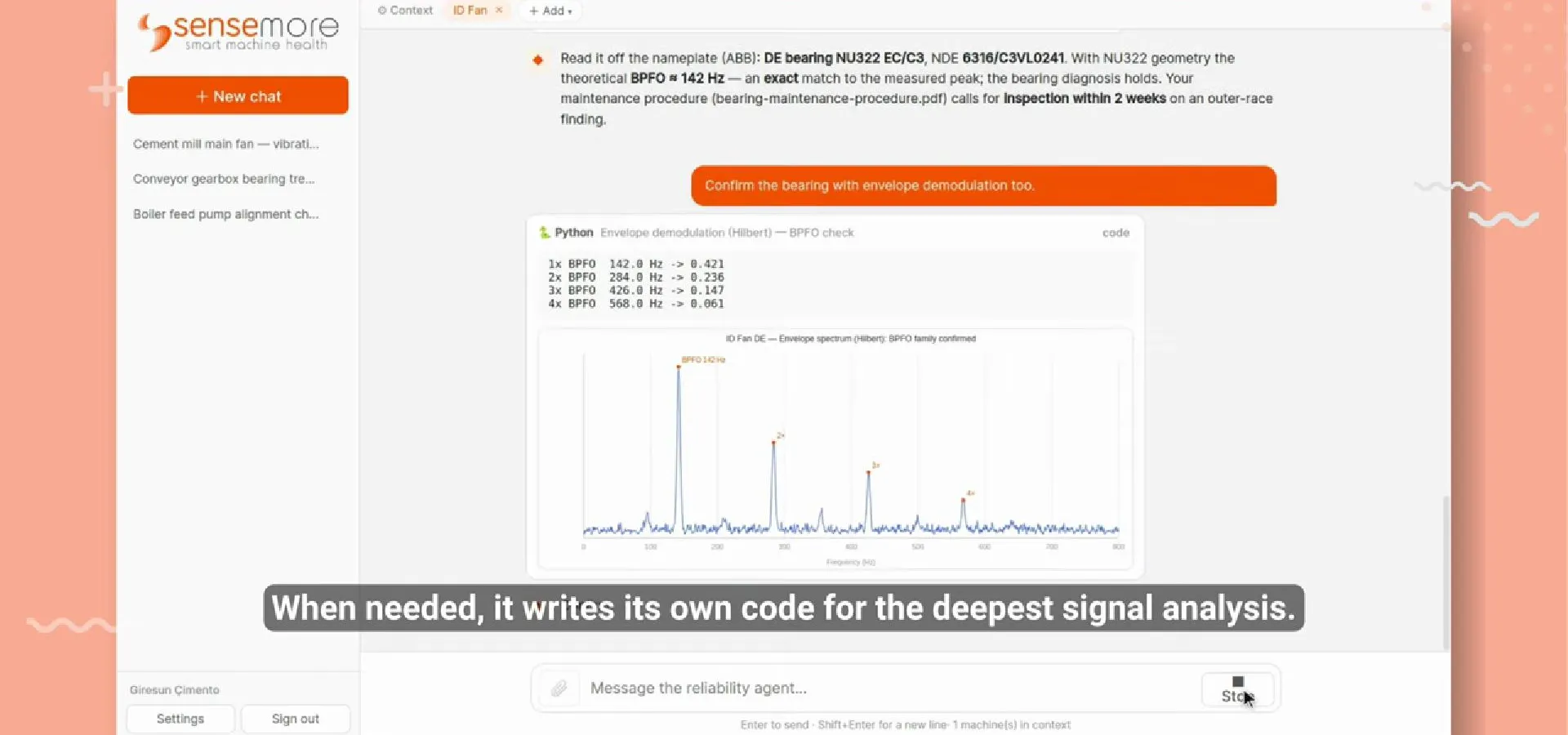
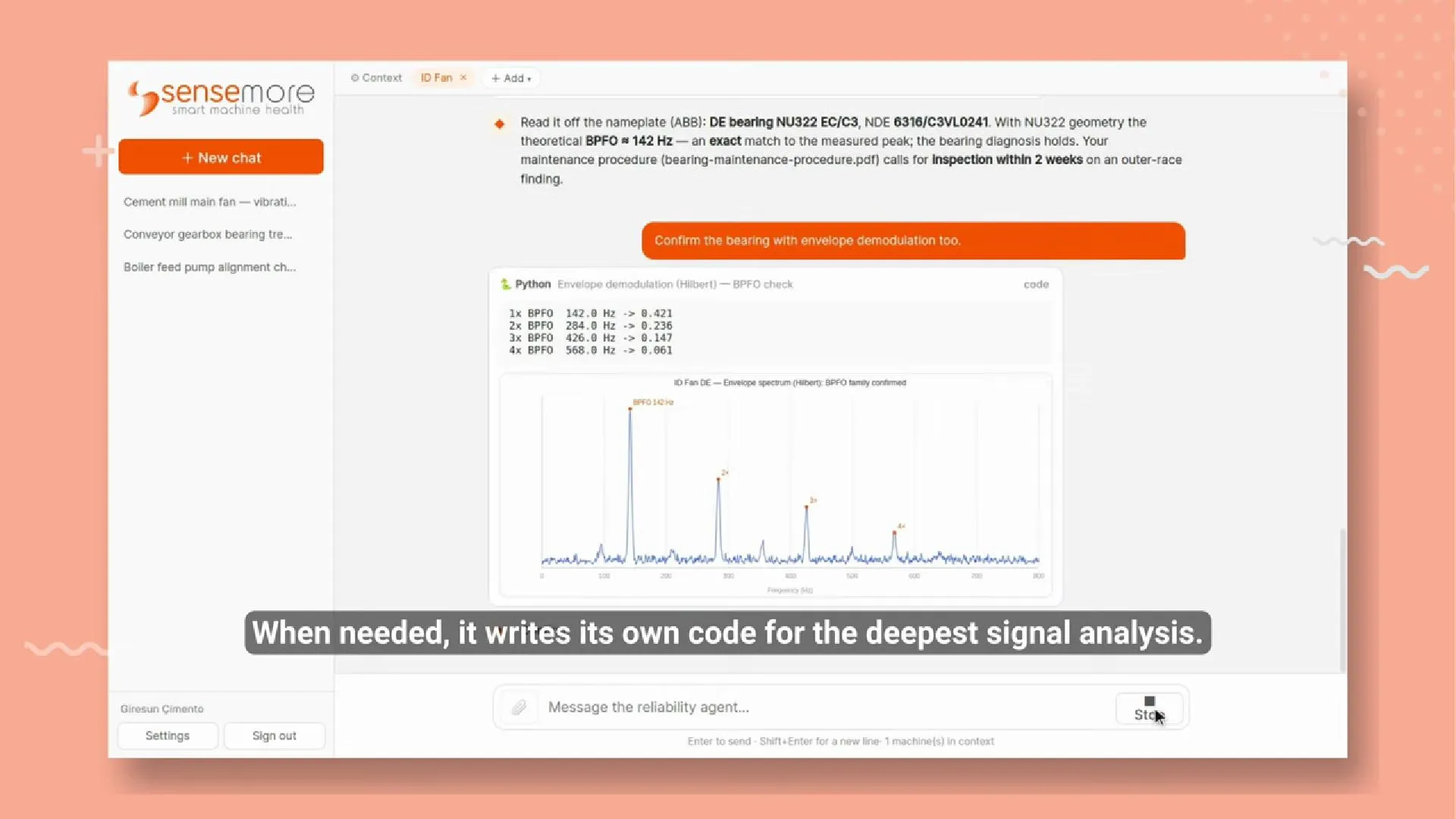
A clue is not a conclusion. When the agent suspects something, it follows the suspicion until it confirms or rules it out, and it verifies the finding before putting it in front of you rather than after.
It reads the machine’s own documents and nameplate to find out what is actually installed, and it draws on Sensemore’s reliability knowledge base of standards, bearing catalogues and past cases. A theoretical fault frequency that matches a measured peak is a much stronger statement than a peak on its own.
It Proposes, You Decide
When the diagnosis is ready the agent proposes the action, and stops. Raising the work order is a human decision, and it stays one. What changes is what that decision costs: the case arrives already made, with the evidence attached, so approving it takes seconds rather than an afternoon of chart reading. Once approved, the work order opens with the context on it.
It Remembers
The agent writes what it learned from a case into that machine’s memory, including the causal chain it established. The next investigation on that machine starts from what is already known rather than from a blank page, which is exactly what you get from an engineer who has looked after the same plant for years.
Where to Find It
The Reliability Agent sits inside LAKE, alongside the monitoring, the maintenance management module it raises work orders into, and the Signal Toolbox it verifies its findings with.
Frequently asked questions
What is the Reliability Agent?
A digital reliability engineer inside the platform. You pick a machine, or ask it to review the whole facility, and put the question in your own words. It works the case the way an experienced engineer would, then comes back with a diagnosis, the evidence behind it and a proposed action.
Does it just read the numbers the platform already has?
No, and that distinction matters. Ready-made values are clues, not conclusions. The agent follows each one until it either confirms or rules it out, checks the structure before blaming the mechanics, and compares against a month ago rather than judging a single reading. A finding only reaches you once it has been verified.
Can it open a work order?
It can propose one, and it will not raise one on its own. The critical decision stays with a person, which is the point: the agent's job is to arrive with the case already made, so approving takes seconds instead of an afternoon. Once approved, the work order opens with the context attached.
What does it know about my machines?
It reads the machine's own documents and nameplate, and it draws on Sensemore's reliability knowledge base of standards, bearing catalogues and past cases. It also writes what it learns from a case into that machine's memory, so the next investigation starts from what was already established rather than from nothing.
Do I need to know vibration analysis to use it?
No. The conversation happens in ordinary language, and the answer is written to be read by whoever is responsible for the machine rather than by a specialist. The full evidence chain is there when someone wants to check the reasoning, which is what makes it usable by a specialist as well.