

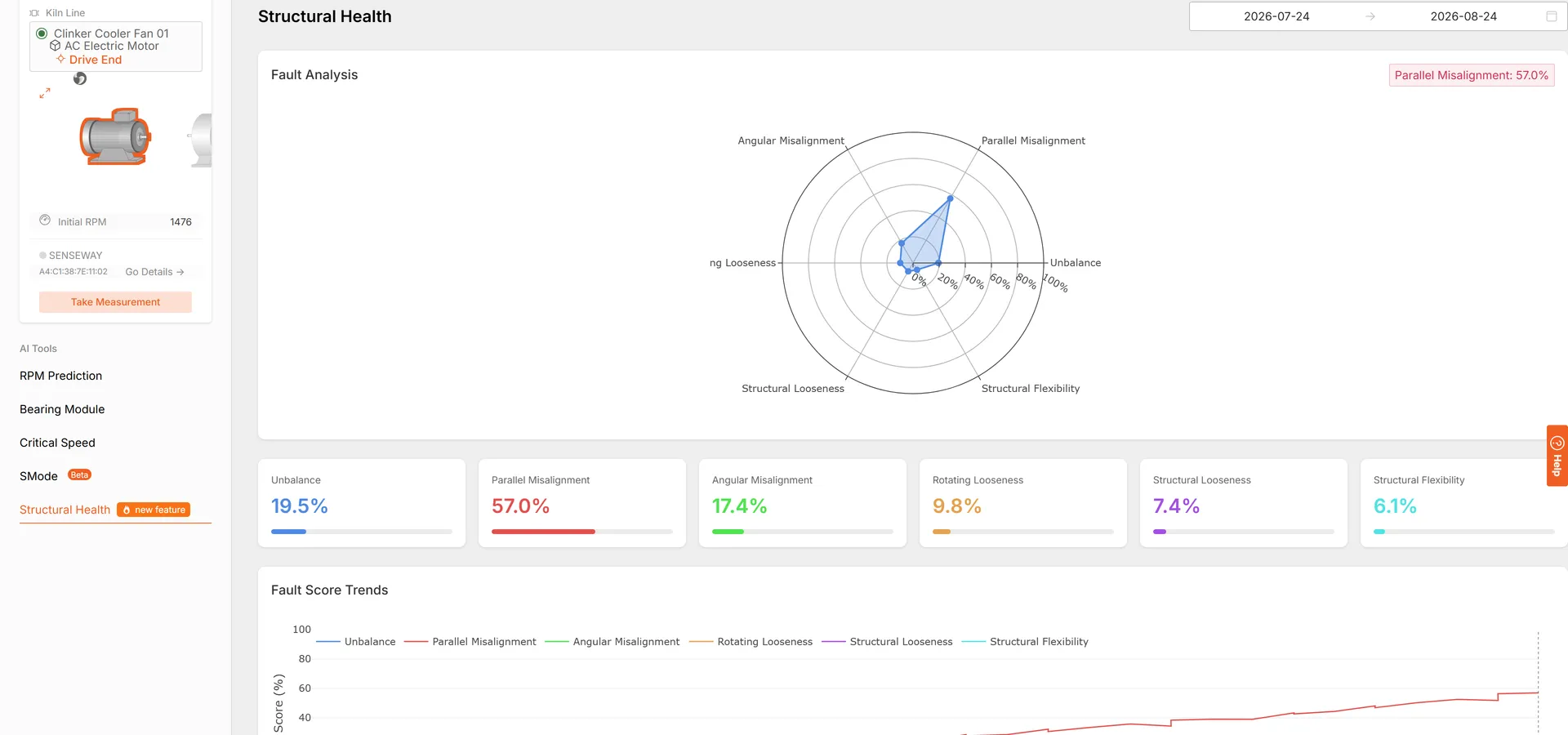
Structural Health scores a machine against the faults that actually cause the damage, one by one. Instead of a single number that says vibration is high, you get a score for unbalance, for parallel and angular misalignment, for rotating and structural looseness, and for structural flexibility, each trended over time so you can see which way it is going.
A Score Per Fault, Not a Verdict
The faults that keep rotating machinery in the workshop are a short list, and they are mostly correctable: a rotor out of balance, a coupling out of line, a foot that has worked loose, a base that flexes. Structural Health scores each of them separately from the vibration the machine is already producing.
That separation is the point. A single severity figure tells a planner that something needs attention. A set of named scores tells them what to put on the work order, which spare to draw, and how long the job will take.
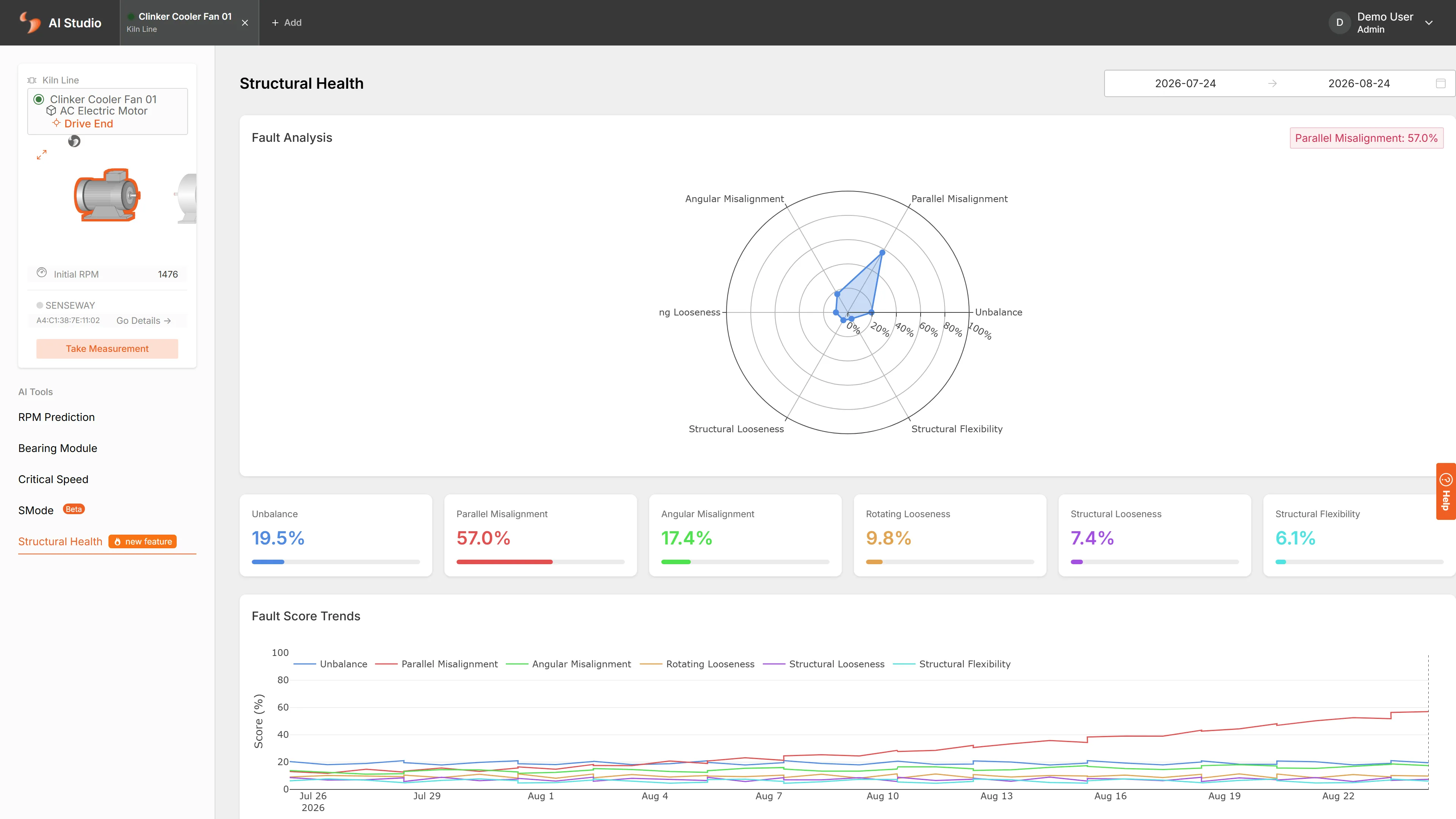
Phase and Reference Frequency Alongside the Scores
The diagnostic detail behind each score is on the same screen: the phase relationships between the horizontal, vertical and axial directions, and the reference frequency the analysis worked from. These are the things a reliability engineer checks before committing to a diagnosis, and having them beside the score is what lets an experienced person agree or disagree with it rather than take it on trust.
Trends, Because Direction Matters More Than Level
Every fault score is trended. A misalignment score that has climbed steadily for three weeks means something different from one that jumped after a coupling change and then settled, even when today’s reading is identical. The trend chart puts the two side by side.
Where to Find It
Structural Health is in AI Studio, alongside RPM Prediction, the Bearing Module, Critical Speed and S-Mode. A machine’s latest structural analysis also surfaces on the monitoring view, so the state is visible without opening the tool.
Frequently asked questions
Which faults does Structural Health look for?
The ones that account for most of the damage on rotating machinery and that a maintenance team can actually fix: unbalance, parallel misalignment, angular misalignment, rotating looseness, structural looseness and structural flexibility. Each is scored separately from the machine's own vibration, so a rising number points at a named fault rather than at "something is wrong".
How is this different from a threshold alarm?
A threshold alarm tells you that vibration has passed a level. It does not tell you why, and a machine can change character without changing level. Structural Health answers the second question: it scores each fault type on its own, so two machines at the same overall vibration can be told apart by what is actually happening inside them.
Can I see whether a fault is getting worse?
Yes. Every fault score is trended over time, so you see the direction rather than a single reading. A misalignment score that has been climbing for three weeks is a different conversation from one that jumped once after a coupling change and settled, and the trend is what tells the two apart.
Do I need extra hardware for it?
No. Structural Health works from the vibration measurements already being collected on the machine. If a sensor point is already feeding the platform, the analysis has what it needs; there is no separate probe, no shutdown and no special test run to arrange.