

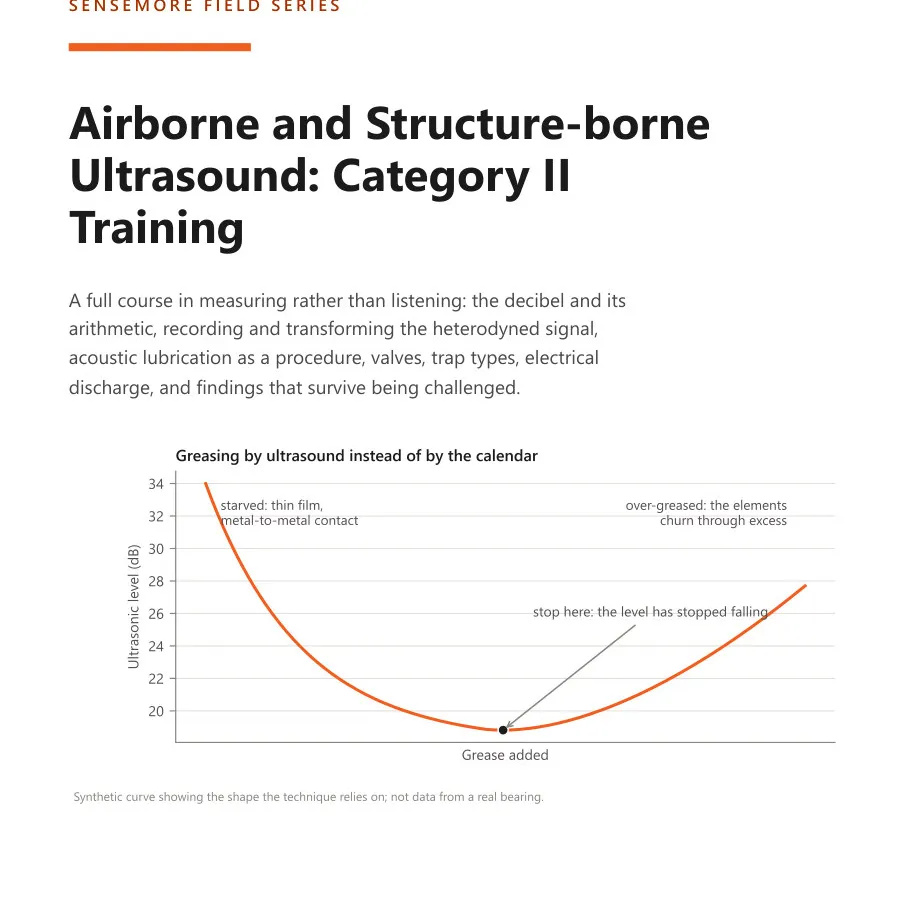
Acoustic lubrication is the application that pays for the instrument, and it is given as a procedure: baseline, inject slowly, watch the level fall, stop when it stops falling, and never chase a number.
The chapter on recording and transforming the signal is what lifts an inspector from listening to analysing: the heterodyned output is ordinary audio, so a bearing’s impacts can be seen as a pulse train and measured as a repetition rate.
Study material written by Sensemore. It is not accredited training, it is not from any certification body’s question bank, and it confers no certification.