

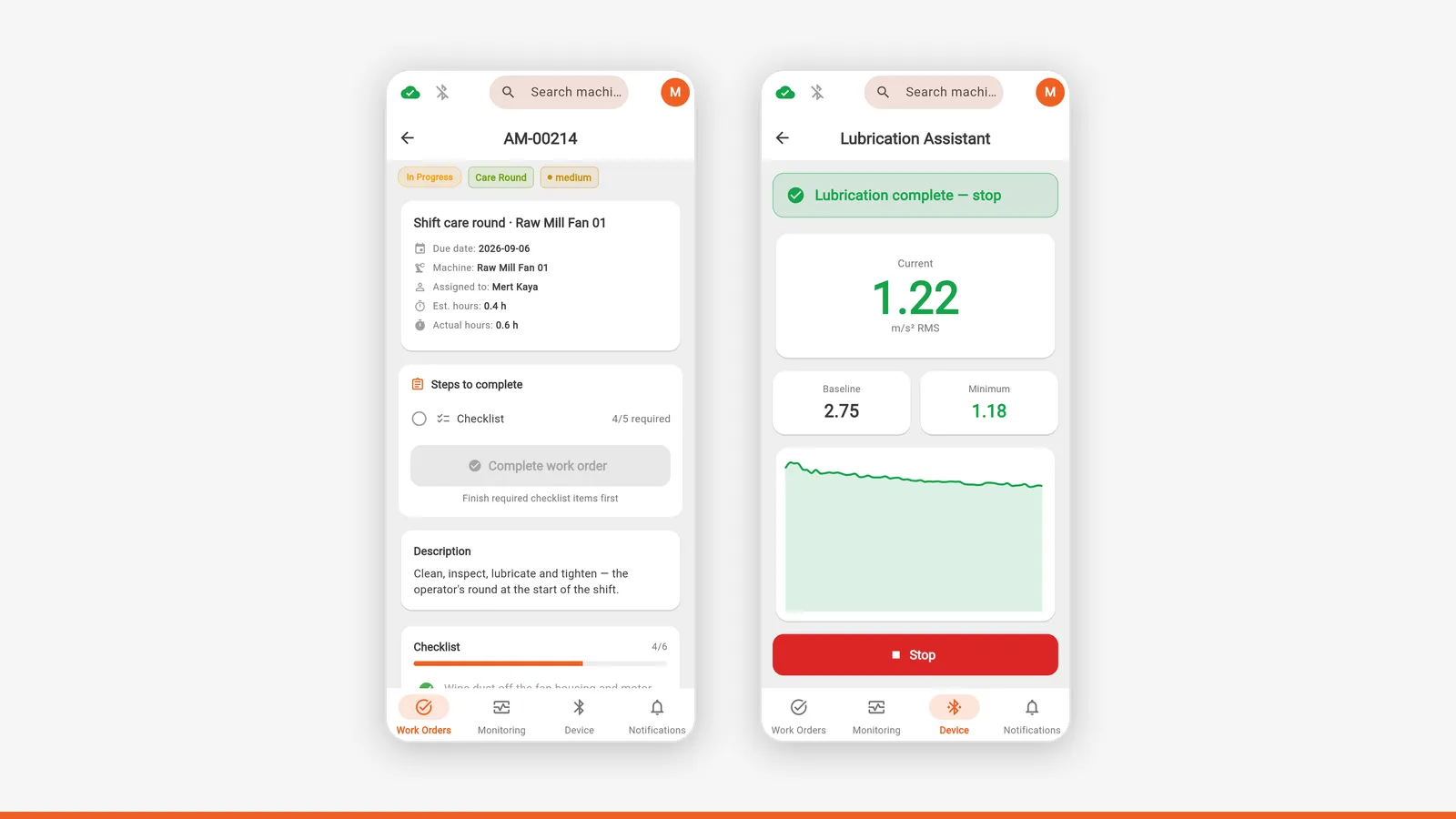
A maintenance plan can now belong to the operators who run the machine. Set its program to autonomous and it files care rounds instead of maintenance jobs: cleaning, inspection, lubrication and tightening, on the shift calendar, with each step saying what to do, how, and what good looks like. What the operator finds along the way is raised as a finding, tagged white or red, and tracked like any other work.
Two Programs on the Plan
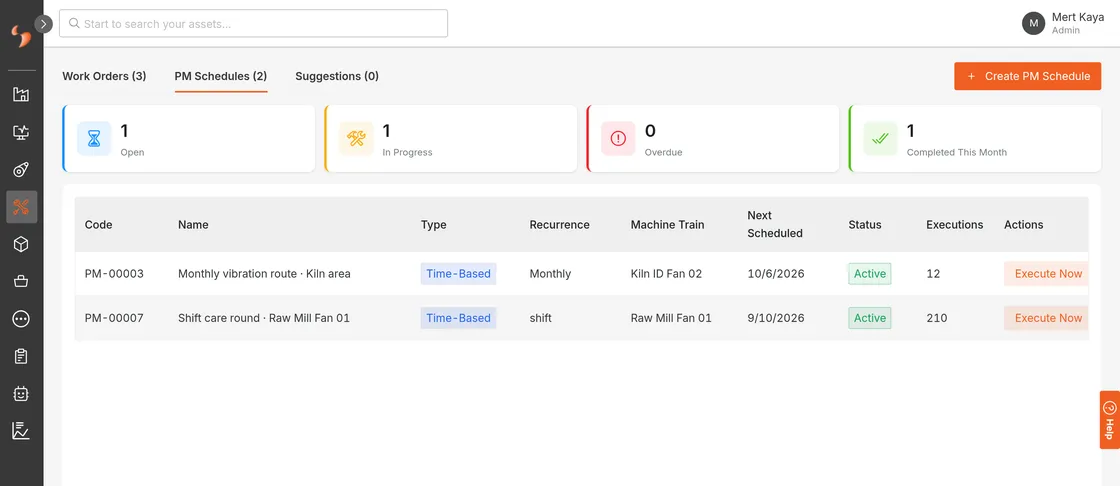
A preventive maintenance plan now declares who does the work. Professional is the maintenance crew, which is what every existing plan is. Autonomous is the operators, and a plan set that way files a care round whatever its template says.
Recurrence gained a shift option to go with it. Pick one of the facility’s shift definitions and a round is raised at the start of every working window of that shift, in the facility’s timezone, with holidays skipped. The two settings are independent: an autonomous plan can run monthly, and a professional plan can run per shift.
Steps That Say What Good Looks Like
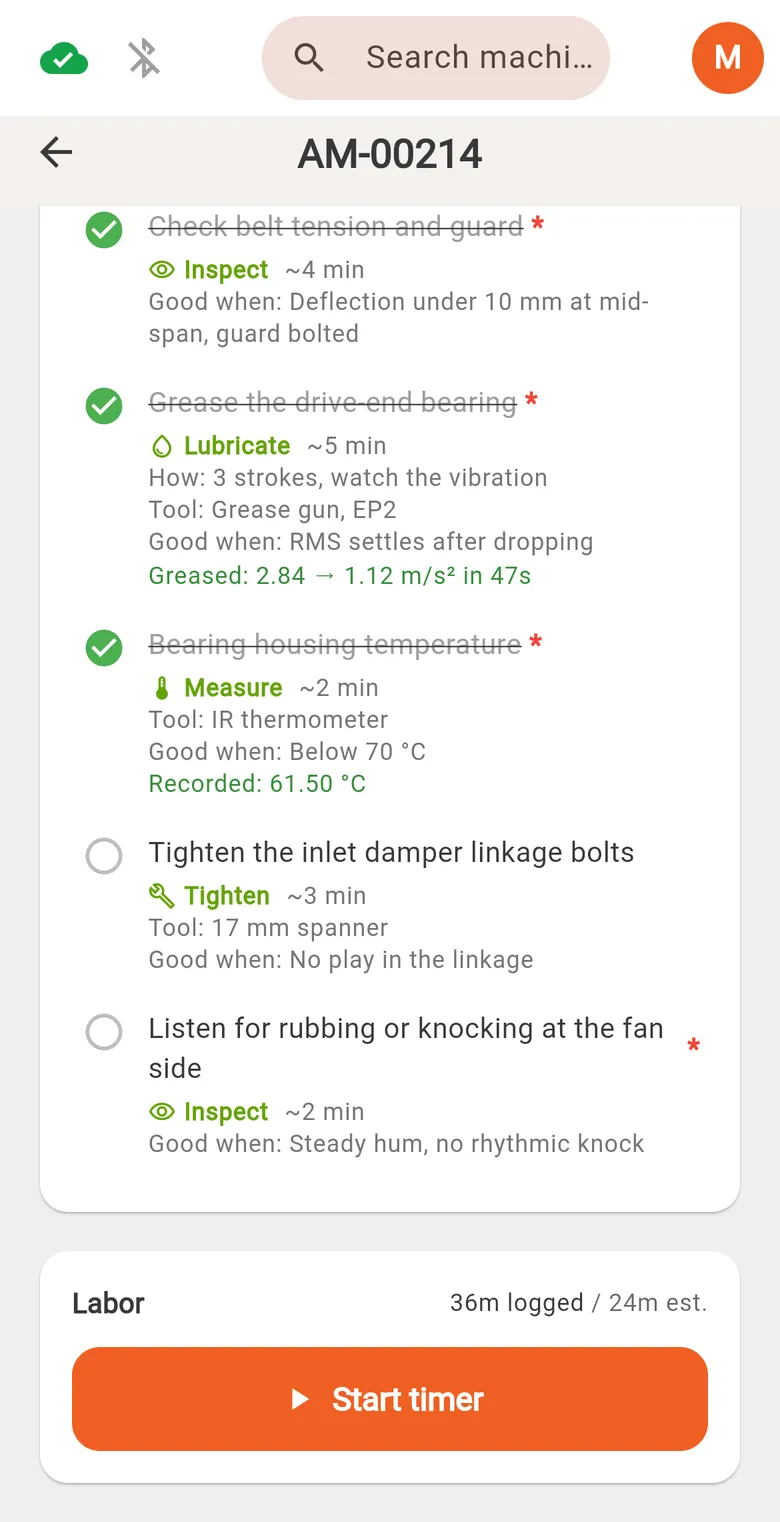
A checklist item on a care round is a care step. It carries an activity, which is clean, inspect, lubricate, tighten or measure; the method, in the words the plant uses; the tool it needs; the standard that decides whether the step passed; and the minutes it should take. Two kinds of step leave a number behind rather than a tick: a measure step records its reading and unit, and a lubricate step records what the greasing did.
Printing the machine’s QR label is what makes the round quick to reach: an operator scans it in On Field and the machine opens, with today’s round on it.
Greasing With the Vibration in View
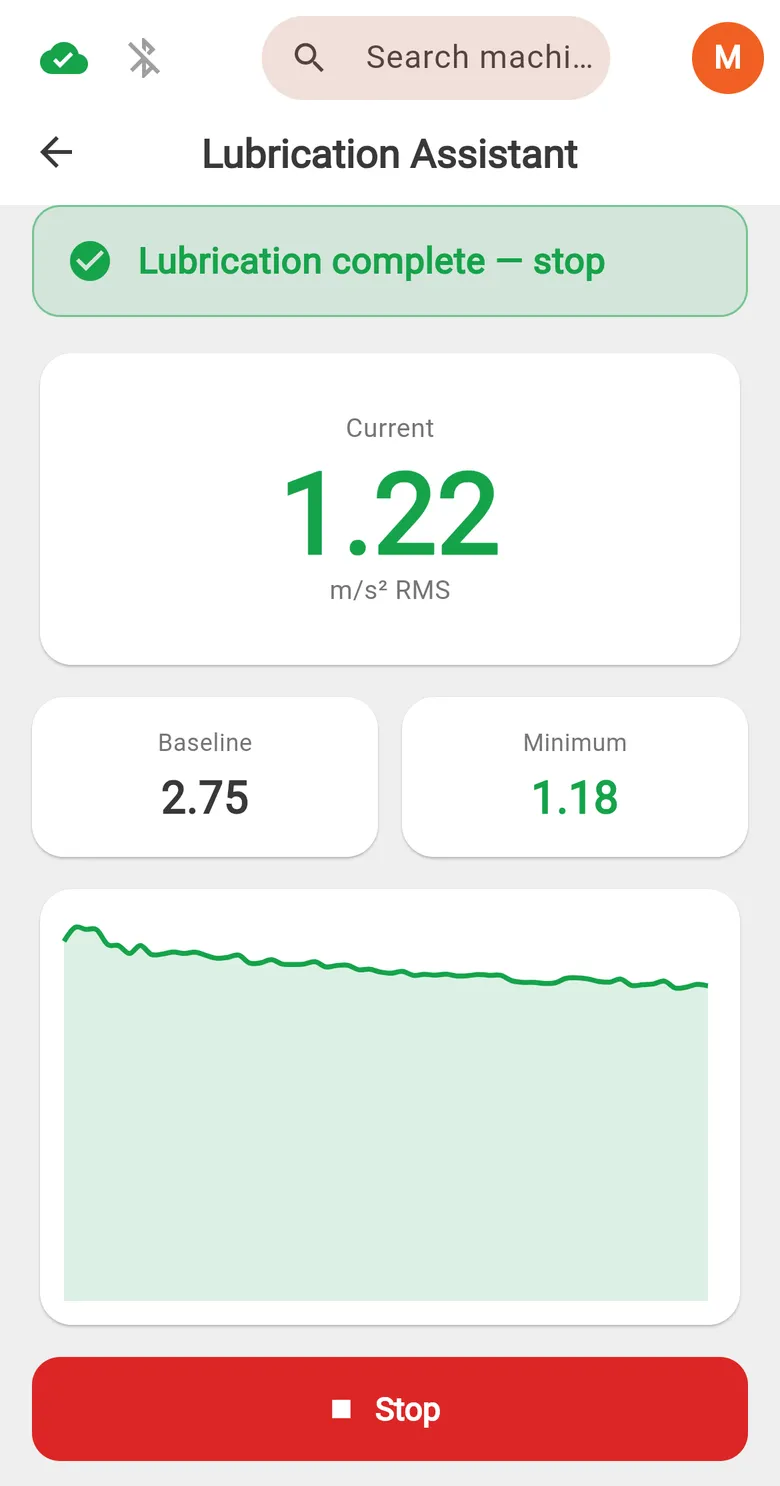
The lubrication assistant watches the bearing while it is greased. It holds the level the machine started at and the lowest level reached, shows the current level as the grease goes in, and says when the level has stopped falling and the job is done. The step keeps the baseline, the minimum and the seconds, which is how a grease job becomes a measurement rather than a habit.
The Finding Is the Point
The value of a round is less in the cleaning than in what the cleaning turns up. An operator who finds something reports it on the machine, picking what it is from eight categories: a source of contamination, a leak, a loose part or fastener, a place hard to access, an unsafe condition, abnormal noise or vibration, abnormal heat, or something else. A photo goes with it.
Then the question that decides its life: who puts it right. A white tag stays with the operator. A red tag, which is the default, hands it to maintenance. Either way it becomes a work order that carries its category, its tag, its photos and the machine, and it can be filtered by both category and tag in the work order list.
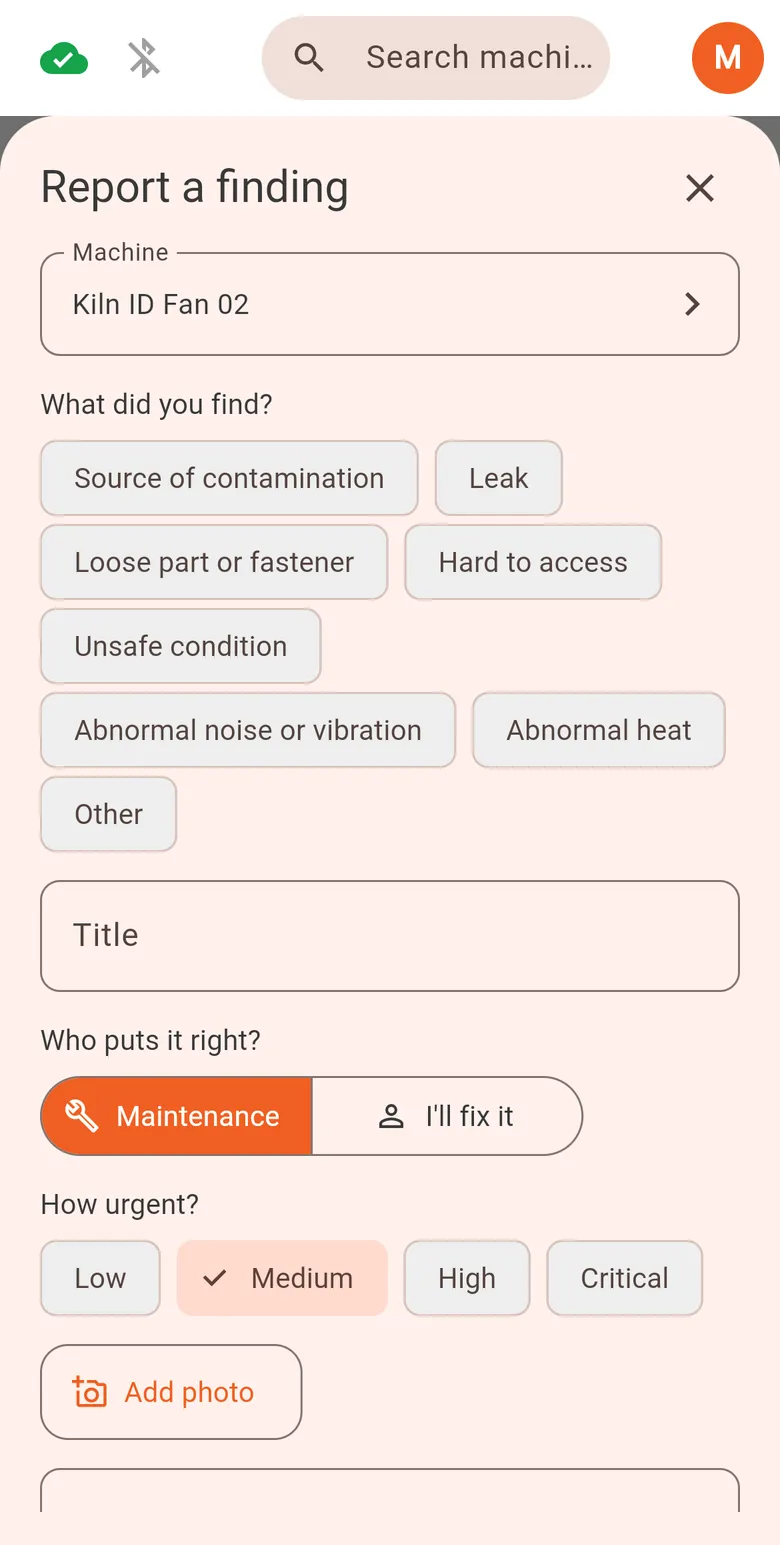
Findings are raised in the field, which is the only place they can be seen: from On Field, or through the API and the MCP tools for anything that automates it. The desk side reads, filters and works them.
What the Programme Is Worth, in Numbers
The maintenance KPI tab gained an autonomous block, and the MCP tool that reports KPIs exposes the same figures. Care round compliance says how many rounds that fell due were completed and how many of those were on time. Operator findings are counted as raised, closed and open, split by category and by white against red, with the average age of an open finding and the median time it takes to close one. Guided lubrications are counted with their average vibration drop and average duration.
Preventive maintenance compliance now covers the professional program only, so the two programmes are measured apart: a plant running two hundred care rounds a week can no longer read that as preventive maintenance being under control.
Frequently asked questions
What is a care round?
A work order of type autonomous care, raised by a maintenance plan whose program is set to autonomous, which means the work belongs to the operators who run the machine rather than to the maintenance crew. Its steps are care steps: clean, inspect, lubricate, tighten or measure, each with the method, the tool, the standard that says what good looks like, and the minutes it should take.
How does one round per shift work?
Set the plan's recurrence to every shift and pick one of the facility's shift definitions. A round is then raised at the start of every working window of that shift, in the facility's own timezone, and holidays are skipped. Program and recurrence are separate settings: an autonomous plan can just as well run monthly, and the shift cadence is available to a professional plan too.
What is a white tag and a red tag?
The answer to who puts the abnormality right. A white tag stays with the operator who found it; a red tag hands it to maintenance, and that is the default. Either way the finding becomes a work order in the same list as everything else, with its category, its photos and the machine it was found on, so it is tracked rather than remembered.
What does guided lubrication record?
The app shows the vibration level live while the bearing is greased, holds the baseline it started from and the lowest level reached, and says when the level has stopped falling. The care step then keeps that result, which is the drop and the seconds it took, so a grease job leaves a number behind instead of a tick.
What do the new KPIs measure?
Three things on the maintenance KPI tab: care round compliance, which is how many rounds that fell due were done and how many were done on time; operator findings, counted raised, closed and open, split by category and by white against red, with the average age of an open finding and the median time to close one; and guided lubrications, with the average vibration drop and the average duration. Preventive maintenance compliance now covers the professional program only, so care rounds no longer flatter it.